

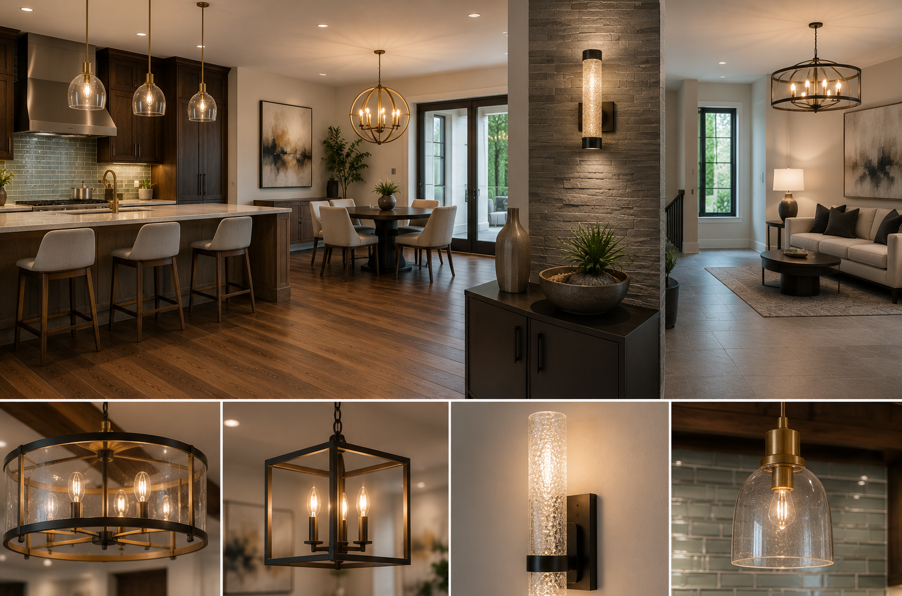
Why Flooring and Lighting Should Be Designed Together
When homeowners plan a renovation or new construction project, flooring and lighting are often selected separately. Flooring choices are usually made early in the design process, while lighting decisions sometimes happen much later. However, the most visually successful interiors are often created when these two elements are considered together from the beginning.
In Fuquay-Varina, homeowners continue to embrace open floor plans, brighter interiors, and design-forward spaces that blend functionality with style. Whether you're installing hardwood flooring in a living room, tile in a kitchen, or glass tile accents in a bathroom, the right lighting can dramatically enhance the appearance of those materials.
Lighting influences how colors appear, how textures are perceived, and how comfortable a room feels throughout the day. A beautiful floor can lose some of its visual impact if paired with poorly selected lighting, while the right fixture can highlight the natural beauty of flooring materials and create a cohesive design.
At The Home Center Flooring & Lighting, homeowners often discover that coordinating flooring and lighting selections together creates a more polished and intentional interior. Understanding how different fixtures interact with hardwood, tile, and glass tile can help you make smarter design decisions throughout your home.
How Lighting Changes the Appearance of Flooring
Before selecting fixtures, it's important to understand how lighting affects flooring materials.
Many homeowners are surprised by how dramatically flooring can appear to change under different lighting conditions.
Natural Light vs Artificial Light
Natural sunlight reveals flooring colors differently throughout the day.
Morning light may create softer tones, while afternoon sunlight often enhances warmth and texture.
Artificial lighting introduces additional variables, including:
Color temperature
Fixture placement
Light intensity
Beam direction
Together, these factors influence how flooring materials appear.
Highlighting Texture and Detail
Lighting can emphasize:
Wood grain patterns
Tile textures
Natural stone variation
Glass tile reflections
Well-positioned lighting often reveals details that might otherwise go unnoticed.
Creating Visual Balance
The goal is not simply making a room brighter.
Effective lighting creates balance between:
Flooring
Cabinetry
Furniture
Wall colors
Decorative finishes
This balanced approach contributes to a more comfortable and visually appealing environment.
Lighting Fixtures That Pair Beautifully with Hardwood Flooring
Hardwood flooring remains one of the most popular flooring choices among Fuquay-Varina homeowners.
Its natural warmth and timeless appeal make it suitable for both traditional and contemporary homes.
Warm Metal Chandeliers
Hardwood floors often pair beautifully with fixtures that feature:
Brushed brass
Aged bronze
Warm metallic finishes
These materials complement the natural warmth found in many hardwood species.
Linear Pendant Lighting
Linear pendants have become increasingly popular over:
Kitchen islands
Dining tables
Open-concept spaces
Their clean lines work particularly well with wide-plank hardwood flooring.
Lantern-Style Fixtures
Lantern fixtures remain a favorite in transitional and farmhouse-inspired homes.
They create visual interest while complementing hardwood's timeless character.
Recommended Color Temperatures
For hardwood flooring, many designers favor lighting within a warm color temperature range.
This helps enhance:
Wood grain detail
Natural warmth
Comfortable atmosphere
Extremely cool lighting can sometimes make hardwood appear less inviting.
Best Lighting Fixtures for Tile Flooring
Tile flooring offers tremendous versatility, appearing in kitchens, bathrooms, entryways, laundry rooms, and living spaces.
Different tile styles benefit from different lighting approaches.
Recessed Lighting
Recessed fixtures remain one of the most versatile options for tile flooring.
Benefits include:
Clean appearance
Even illumination
Minimal visual clutter
Contemporary styling
These fixtures allow tile patterns and textures to remain the focal point.
Statement Pendants
In kitchens and dining areas, decorative pendants often complement tile beautifully.
Popular choices include:
Glass pendants
Matte black fixtures
Contemporary geometric designs
Mixed-material fixtures
These pieces add personality while enhancing the surrounding flooring.
Layered Lighting Designs
Tile often benefits from multiple lighting sources.
Combining:
Recessed lighting
Accent lighting
Decorative fixtures
creates depth and improves visual interest.
Highlighting Large-Format Tile
Large-format tile has become increasingly popular because it creates a clean, sophisticated appearance.
Thoughtfully placed lighting helps emphasize:
Tile layout
Surface texture
Grout line consistency
This contributes to a more refined finished space.
Why Glass Tile Responds Differently to Lighting
Glass tile is unique because it interacts directly with light.
Unlike many other materials, glass surfaces reflect, refract, and amplify light throughout a room.
The Reflective Advantage
Glass tile helps create:
Increased brightness
Enhanced visual depth
Greater light distribution
Dynamic visual interest
This makes it particularly attractive in spaces where homeowners want a brighter appearance.
Common Glass Tile Applications
Glass tile frequently appears in:
Kitchen backsplashes
Shower surrounds
Bathroom accent walls
Decorative feature installations
Lighting plays a major role in maximizing the impact of these installations.
The Importance of Fixture Placement
Glass tile performs best when lighting is intentionally positioned.
Proper placement helps:
Reduce unwanted glare
Enhance reflective qualities
Highlight texture and color variation
Poor fixture placement can sometimes diminish the material's visual appeal.
Lighting Fixtures That Work Best with Glass Tile
Certain fixture styles complement glass tile particularly well.
Glass Pendant Fixtures
Glass pendants create visual continuity with glass tile surfaces.
Benefits include:
Elegant appearance
Enhanced light reflection
Design cohesion
These fixtures work especially well in kitchens and bathrooms.
Under-Cabinet Lighting
Under-cabinet lighting remains one of the most effective ways to showcase glass tile backsplashes.
Advantages include:
Direct illumination
Enhanced sparkle
Improved task lighting
This combination remains popular in modern kitchens.
LED Accent Lighting
LED accent lighting can highlight decorative tile installations without overwhelming the space.
Applications include:
Niche lighting
Feature walls
Display areas
These subtle touches often create impressive results.
Contemporary Sconces
Wall sconces positioned near glass tile installations help create visual layering while enhancing reflective surfaces.
Coordinating Lighting with Multiple Flooring Materials
Many Fuquay-Varina homes feature multiple flooring materials throughout the interior.
For example:
Hardwood in living areas
Tile in kitchens
Glass tile accents in bathrooms
The challenge becomes creating a cohesive lighting plan that works throughout the home.
Focus on Consistency
While fixtures don't need to match exactly, they should share common design characteristics.
Examples include:
Similar finishes
Coordinated shapes
Consistent design language
This creates visual harmony.
Consider Sight Lines
Open-concept layouts often allow multiple rooms to be viewed simultaneously.
A unified lighting strategy helps maintain consistency throughout connected spaces.
Balance Function and Style
Lighting should support:
Everyday activities
Aesthetic goals
Comfort
Long-term usability
Successful designs balance all of these considerations.
Popular Lighting Trends in Fuquay-Varina Homes
Local homeowners continue embracing lighting styles that blend functionality with visual impact.
Mixed Metal Finishes
Many designers now combine finishes such as:
Black and brass
Bronze and gold
Matte black and chrome
These combinations add character while remaining sophisticated.
Oversized Statement Fixtures
Larger fixtures continue gaining popularity in:
Entryways
Dining rooms
Living spaces
These pieces create strong focal points.
Organic Modern Designs
Organic modern design combines clean contemporary lines with natural materials.
Popular fixture materials include:
Wood
Glass
Woven textures
Natural metals
These styles pair beautifully with hardwood and tile flooring.
Minimalist Lighting
Simple fixtures remain popular because they allow flooring, furniture, and architectural details to stand out.
Common Mistakes to Avoid
Even beautiful fixtures can create challenges if selected without considering the surrounding materials.
Choosing Fixtures in Isolation
Lighting should never be selected without considering flooring and overall design.
Reviewing materials together often leads to better results.
Ignoring Color Temperature
Different bulbs produce dramatically different effects.
Testing lighting temperatures before final installation can help avoid disappointment.
Overlooking Scale
Fixtures that are too small or too large can disrupt visual balance.
Proper sizing remains critical.
Forgetting Layered Lighting
Relying on a single light source often produces flat, less interesting interiors.
Combining multiple lighting types creates a more comfortable environment.
Bringing Flooring and Lighting Together for a Cohesive Design
Great interior design happens when multiple elements work together rather than competing for attention.
Hardwood flooring benefits from warm, inviting fixtures that enhance natural grain and character. Tile flooring pairs beautifully with layered lighting that highlights texture and layout. Glass tile installations shine brightest when supported by fixtures that maximize reflection and depth.
By considering flooring and lighting as part of a unified design strategy, homeowners can create spaces that feel balanced, functional, and visually appealing.
Whether you're building a new home, remodeling a kitchen, updating a bathroom, or refreshing your living spaces, coordinating these selections early in the process often leads to stronger long-term results.
If you're planning a renovation and want expert guidance on flooring and lighting selections, reach out to us. The team at The Home Center Flooring & Lighting can help you choose products that work beautifully together and support your overall design vision.


