

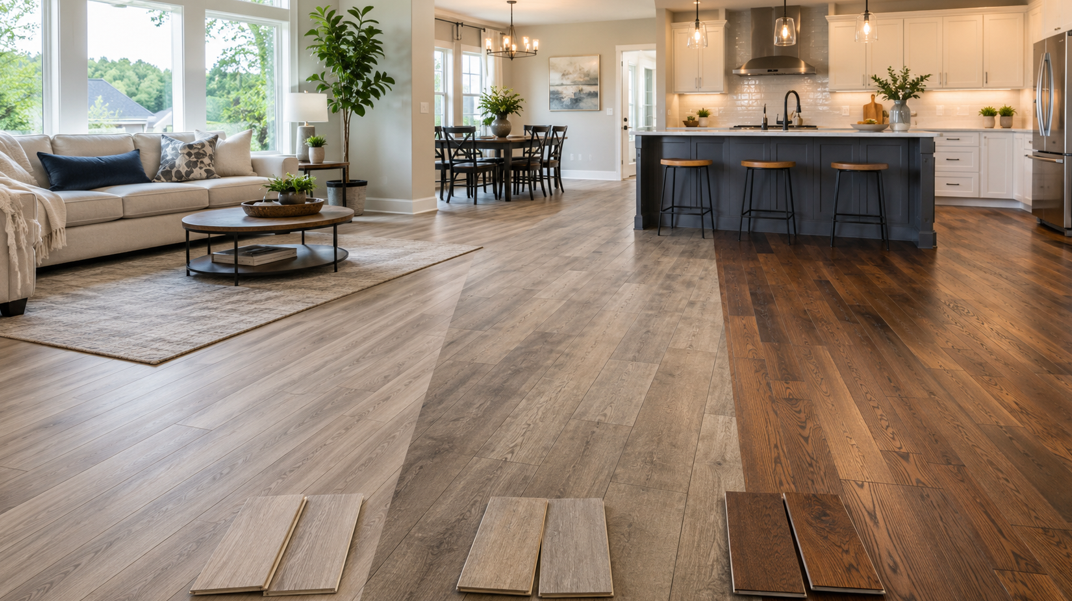
The Lowest Upfront Price Is Not Always the Best Long-Term Value
Choosing new flooring often starts with one question: How much will it cost? That matters, but the purchase price tells only part of the story. A floor that costs less today may need replacement sooner, while a more substantial initial investment may deliver decades of use when it is installed and maintained properly.
For homeowners in Apex, North Carolina, the most cost-effective choice depends on the room, household, design goals, maintenance expectations, and how long the family plans to remain in the home. Laminate, luxury vinyl, and hardwood can all provide strong value, but they deliver that value in different ways.
At The Home Center, homeowners can compare flooring materials with guidance from experienced design professionals who consider the complete project, not simply the price displayed on a sample.
This comparison looks at the factors that shape flooring value over time:
Initial material and installation costs
Expected service life
Resistance to moisture, scratches, and daily wear
Cleaning and maintenance requirements
Repair and replacement options
Comfort and appearance
Potential influence on buyer appeal
Suitability for different rooms
There is no single winner for every Apex home. The right answer comes from matching the flooring to the way each space is actually used.
What Does “Cost-Effective Over Time” Mean?
Cost-effectiveness is the relationship between what a floor costs and the value it delivers throughout its usable life.
A complete comparison may include:
Flooring material
Delivery
Removal and disposal of existing flooring
Subfloor preparation
Underlayment
Installation labor
Trim and transitions
Routine cleaning
Periodic maintenance
Repairs
Refinishing, when available
Eventual replacement
A material with a lower upfront price may be a practical choice for a busy family, rental property, or room likely to be remodeled again. A higher-priced floor may provide better long-term value in a permanent home when it offers a longer service life or can be renewed rather than replaced.
It is also important to compare products of similar quality. Entry-level laminate should not be treated as equivalent to premium hardwood, and a basic luxury vinyl product should not be compared directly with a thicker, higher-performing option without considering construction and warranty differences.
Laminate Flooring: Strong Style at an Accessible Starting Point
Laminate flooring is designed to reproduce the appearance of wood, stone, or other materials using a photographic design layer protected by a durable wear surface. Modern options can provide realistic grain patterns, varied plank visuals, embossed textures, and a broad range of colors.
For many Apex households, laminate offers one of the strongest combinations of appearance, durability, and manageable upfront cost.
Where Laminate Provides Good Value
Laminate can be especially cost-effective in:
Living rooms
Bedrooms
Home offices
Hallways
Dining areas
Playrooms
Selected kitchens or entry areas when the product is approved for them
It suits homeowners who want a wood-inspired appearance without committing to the cost or maintenance expectations of genuine hardwood.
Typical Long-Term Advantages
A quality laminate floor can resist everyday scratches, scuffs, and surface wear. That makes it appealing in homes with children, pets, frequent visitors, or active routines.
Its printed design also provides visual consistency. Homeowners can select from pale oak looks, warm browns, gray tones, wide planks, rustic textures, or cleaner contemporary styles.
Many products use click-lock installation systems, which may help make installation more efficient when the subfloor is properly prepared.
Long-Term Limitations
Laminate cannot generally be sanded and refinished like solid hardwood. If a plank becomes seriously damaged, the usual solution is to replace the affected plank or section.
Moisture resistance varies considerably. Some products are water-resistant or waterproof for a stated period or under specified conditions, but that does not make every laminate suitable for bathrooms, laundry areas, or repeated standing water.
Homeowners benefit from reviewing the exact product instructions instead of relying on the general category name.
When Laminate May Be the Most Cost-Effective Choice
Laminate may provide the best overall value when:
The budget needs to remain focused
Scratch resistance is a priority
The homeowner wants realistic wood visuals
The room is not regularly exposed to standing water
Refinishing is not an important future goal
The expected ownership period is moderate
Easy routine cleaning matters
Homeowners can explore laminate flooring options to compare plank styles, finishes, performance features, and products suited to different areas of the home.
Luxury Vinyl: Practical Performance in Moisture-Prone Spaces
Luxury vinyl flooring is available in plank and tile formats designed to recreate the look of wood, stone, or ceramic. It is often chosen for its water resistance, comfort, and suitability for busy households.
Luxury vinyl may cost more upfront than some laminate options, but its moisture performance can create better long-term value in certain rooms.
Where Luxury Vinyl Provides Good Value
Luxury vinyl can work well in:
Kitchens
Bathrooms
Laundry rooms
Mudrooms
Basements
Entryways
Family rooms
Open-plan living spaces
Its ability to handle spills and everyday moisture makes it attractive for rooms where water exposure is more likely.
Typical Long-Term Advantages
Luxury vinyl generally provides a resilient surface with a slightly softer feeling underfoot than tile or hardwood. It can also reduce some of the sound associated with footsteps, depending on its construction and underlayment.
Quality products may offer:
Water-resistant or waterproof construction
Protective wear layers
Stain resistance
Realistic embossed textures
Low-maintenance cleaning
Coordinated trim pieces
Compatibility with selected installation methods
For a family that wants one continuous flooring look across a kitchen, dining area, hallway, and living room, luxury vinyl may offer a useful balance between appearance and performance.
Long-Term Limitations
Luxury vinyl cannot be refinished. Deep scratches, dents, damaged edges, or discoloration may require plank replacement.
Its performance depends heavily on product quality and installation. Thin or poorly supported flooring may reveal unevenness beneath the surface. Heavy furniture, sharp objects, excessive heat, or direct sunlight may also affect some products.
Subfloor preparation remains important even when the flooring itself is flexible. A smooth, stable foundation helps protect joints and maintain the intended appearance.
When Luxury Vinyl May Be the Most Cost-Effective Choice
Luxury vinyl may provide the strongest value when:
Moisture exposure is a major concern
The flooring will extend through several connected rooms
The household needs straightforward maintenance
Comfort underfoot matters
A wood or stone look is desired in a bathroom or laundry area
The homeowner does not expect to refinish the floor
Product replacement is acceptable at the end of its service life
In rooms where moisture could damage laminate or hardwood, paying more for appropriate luxury vinyl may be less costly than repairing or replacing an unsuitable floor later.
Hardwood: Higher Initial Cost with Long-Term Renewal Potential
Hardwood flooring offers natural grain, color variation, and character that manufactured flooring is designed to imitate. It may require the largest upfront investment of the three options, but it also has a major long-term advantage: many hardwood floors can be renewed through screening, recoating, or refinishing.
This makes hardwood a different kind of investment. Its value is often measured over decades rather than only the first several years.
Solid and Engineered Hardwood
Solid hardwood is made from a single piece of wood. Depending on plank thickness, construction, and condition, it may be sanded and refinished multiple times.
Engineered hardwood has a genuine wood surface over a layered core. Some engineered products can be refinished, while others have a thinner wear layer that limits renewal options.
The specific construction matters. Homeowners who value future refinishing should confirm the product’s wear-layer thickness and manufacturer guidance before purchasing.
Where Hardwood Provides Good Value
Hardwood is often selected for:
Living rooms
Dining rooms
Bedrooms
Hallways
Home offices
Main-level gathering spaces
Formal rooms
It can work particularly well in homes where the owners expect to remain for many years and want a material that can evolve with future design updates.
Typical Long-Term Advantages
Hardwood provides natural variation that gives each installation a distinctive appearance. It can complement traditional, transitional, contemporary, farmhouse, and many other home styles.
Its major lifecycle advantages include:
Potential for refinishing
Ability to change stain color in some cases
Long service life with suitable care
Strong recognition among homebuyers
Timeless visual appeal
Repair options for individual boards
Natural material authenticity
A worn hardwood floor may not need full replacement. Depending on its condition, it may be possible to refresh the finish or sand and refinish the surface.
Long-Term Limitations
Hardwood is sensitive to moisture, humidity changes, scratching, and dents. Spills need prompt attention, and the floor may not be ideal for every bathroom, laundry room, basement, or moisture-prone entry.
Apex experiences seasonal humidity changes, so correct acclimation, installation, and indoor climate management are important. Wood naturally expands and contracts as conditions change.
Hardwood may also require more periodic care than laminate or luxury vinyl. Protective pads, rugs in high-traffic zones, and suitable cleaning products can help preserve the finish.
When Hardwood May Be the Most Cost-Effective Choice
Hardwood may offer the best long-term value when:
The homeowner plans to stay for many years
Natural material is a priority
Refinishing is valuable
Buyer appeal matters
The room has controlled moisture conditions
The household accepts periodic care
The budget can support a larger initial investment
Hardwood is not automatically the most economical choice, but its renewal potential can make it competitive over a long ownership period.
Comparing Initial Project Costs
The material price is only one part of the starting budget.
Laminate
Laminate often has the lowest or one of the lowest starting prices among the three categories. Installation may also be relatively efficient when the room is open, the subfloor is level, and the layout is straightforward.
Possible additional expenses include:
Moisture-resistant underlayment
Subfloor leveling
Stair pieces
Matching transitions
Removal of existing flooring
Baseboard adjustments
Luxury Vinyl
Luxury vinyl varies from accessible products to premium options with thicker cores, enhanced wear layers, attached pads, detailed visuals, and improved surface textures.
Some luxury vinyl can be installed as a floating floor, while other products use adhesive. Each method has different preparation requirements.
Hardwood
Hardwood usually carries the highest initial material and labor costs. The total may also include:
Acclimation time
Specialized installation
Moisture testing
Fasteners or adhesive
On-site finishing for unfinished wood
Custom trim
Stair components
Subfloor repair
Removal of existing surfaces
A lower-cost product can still produce a higher total if the room requires extensive preparation. Request a complete estimate before comparing categories.
Service Life and Replacement Cycles
A floor’s usable life depends on product quality, installation, room conditions, traffic, care, and household habits. No single lifespan applies to every product.
Laminate Lifecycle
A well-selected laminate floor can provide years of dependable use. Its value is strongest when the wear layer suits the traffic level and the product is protected from moisture outside its approved limits.
At the end of its service life, laminate is generally replaced rather than refinished.
Luxury Vinyl Lifecycle
Luxury vinyl can offer a long service period when the wear layer, core, and installation method suit the room. It is commonly chosen for busy spaces because daily care is straightforward.
Like laminate, it is normally replaced rather than refinished.
Hardwood Lifecycle
Hardwood may have the longest potential lifecycle because many products can be restored. A floor may receive maintenance coats during its life and full refinishing when the surface becomes heavily worn.
The ability to renew hardwood can spread its initial investment across a longer period. However, not every engineered hardwood product offers the same refinishing potential.
Maintenance Costs and Daily Care
Routine care affects both appearance and long-term cost.
Caring for Laminate
Laminate usually requires sweeping, vacuuming with a suitable attachment, and damp cleaning with an approved product.
Avoid allowing water to collect along seams or edges. Felt pads beneath furniture and entry mats can help limit scratching and tracked-in grit.
Caring for Luxury Vinyl
Luxury vinyl is also relatively easy to clean. Regular removal of grit helps protect the wear layer, while approved cleaners prevent residue.
Use protective pads beneath furniture and follow product guidance for rolling chairs, heavy appliances, and rubber-backed mats.
Caring for Hardwood
Hardwood benefits from regular dust removal, prompt spill cleanup, protective pads, and indoor humidity management. Approved wood-floor cleaners help preserve the finish.
Over time, the floor may need a new finish coat or refinishing. These services add cost, but they can also extend the floor’s life and postpone replacement.
Repair Options and Unexpected Damage
Repairability can strongly influence lifecycle value.
Laminate Repairs
Individual laminate planks may sometimes be replaced, but access can be challenging when the damaged area is far from the nearest wall in a floating installation.
Keeping spare planks from the original production lot can make future repairs easier.
Luxury Vinyl Repairs
Damaged luxury vinyl planks or tiles may also be replaceable, depending on the installation method. Glue-down products and click systems use different repair processes.
Save extra material because colors and visuals may change between manufacturing runs.
Hardwood Repairs
Hardwood can often be repaired by replacing individual boards, touching up small finish damage, recoating, or refinishing a larger area.
Matching an older stain and finish can require professional skill, but the range of repair options gives hardwood a lifecycle advantage.
Moisture Changes the Cost Comparison
Moisture is one of the most important factors in selecting flooring.
A lower-priced floor is not cost-effective if it is installed in a room that exceeds its performance limits.
Kitchens and Mudrooms
Kitchens and mudrooms experience spills, tracked-in rain, pet bowls, and frequent cleaning. Water-resistant laminate may suit some households, while luxury vinyl often provides greater reassurance in areas with repeated moisture exposure.
Hardwood can work in kitchens when spills are managed promptly and the household accepts the maintenance needs.
Bathrooms and Laundry Rooms
Luxury vinyl is often the most practical of the three categories for bathrooms and laundry rooms because many products are designed for moisture-prone spaces.
Only use laminate or hardwood when the exact product and installation system are approved for the location.
Basements
Concrete moisture, humidity, and temperature conditions influence basement flooring. Luxury vinyl and selected laminate products may be considered, but the slab and room conditions need evaluation.
Hardwood suitability depends on the product, installation method, and moisture conditions. Engineered wood may offer more options than solid hardwood in certain below-grade applications.
Pets, Children, and Busy Household Routines
A household’s daily activity can change which floor delivers the best value.
Homes with Pets
Laminate’s scratch resistance can make it appealing for dogs, although spills and pet accidents still need prompt cleanup.
Luxury vinyl provides moisture resistance and comfortable footing, but sharp claws and heavy activity may affect lower-quality wear layers.
Hardwood can scratch and dent, yet many homeowners appreciate the way natural wear contributes to its character. Refinishing may eventually restore a heavily worn surface.
Homes with Young Children
Luxury vinyl and laminate are easy to clean after everyday spills and creative projects. Their lower initial cost may also reduce concern about normal family wear.
Hardwood provides long-term potential, but families may need to accept surface marks or use rugs in play areas.
High-Traffic Homes
Entryways, hallways, kitchens, and family rooms need flooring selected for the expected traffic level. Product quality matters more than category alone.
A premium laminate or luxury vinyl product may outperform an entry-level option from the same category.
Comfort, Sound, and Everyday Experience
Value is not purely financial. A floor used every day also needs to feel right in the home.
Laminate can feel firm underfoot, although underlayment may improve sound and comfort. Luxury vinyl often feels slightly more resilient and may reduce some footfall noise.
Hardwood has a natural warmth and solid feel that many homeowners value. Its sound and comfort depend on the installation method, subfloor, rugs, and room furnishings.
Consider how the floor will feel:
When walking barefoot
In rooms where children play
Beneath dining chairs
Around pets
In upstairs spaces
Across large open-plan areas
During cooler months
The most cost-effective floor is one the household will continue to enjoy rather than replace early because it feels wrong for the space.
Appearance and Homebuyer Appeal
Flooring can influence how buyers perceive a home, but preferences vary.
Hardwood is widely recognized as a desirable natural material and may support buyer appeal when it is in good condition and suits the home.
Luxury vinyl has become popular because it offers consistent appearance and practical performance. Buyers may appreciate it in kitchens, bathrooms, basements, and homes designed for low-maintenance living.
Laminate can also present well when it has realistic visuals, clean installation, and coordinated transitions. Quality and condition often matter more than the category label alone.
No flooring choice guarantees a particular resale return. Consider the expectations for the home, neighborhood, price range, and rooms being updated.
Which Flooring Is Most Cost-Effective for Your Apex Home?
The answer depends on your priorities.
Choose Laminate When
You want strong wood visuals at an accessible starting price.
Scratch resistance is important.
The rooms have limited moisture exposure.
Easy routine maintenance is a priority.
You expect to replace rather than refinish the floor eventually.
You want to update several rooms while managing the total budget.
Choose Luxury Vinyl When
Moisture resistance is one of the main concerns.
The flooring will extend through kitchens, bathrooms, or laundry areas.
Comfort and straightforward cleaning matter.
You want a consistent look across several connected spaces.
Refinishing is not part of the long-term plan.
Daily practicality takes priority over natural material.
Choose Hardwood When
You plan to remain in the home for many years.
Natural wood character is central to the design.
Refinishing and repair options matter.
The rooms have suitable moisture conditions.
You accept periodic maintenance.
Long-term renewal is more important than the lowest initial price.
Consider Using More Than One Material
Many homes benefit from a room-by-room approach rather than using one floor everywhere.
For example:
Hardwood in living areas and bedrooms
Luxury vinyl in laundry rooms or bathrooms
Laminate in offices, playrooms, or budget-sensitive updates
Coordinating colors and plank proportions can create a connected appearance even when performance needs differ.
Make the Decision Based on Your Real Priorities
Laminate often provides the strongest upfront value, especially for homeowners who want realistic wood style, scratch resistance, and manageable project costs.
Luxury vinyl may be the most cost-effective choice in moisture-prone or highly active rooms because its practical performance can reduce the risk of early replacement.
Hardwood can offer the greatest long-term renewal potential. Although it usually requires a larger initial investment, its ability to be repaired, recoated, or refinished may provide excellent value for homeowners planning to stay in place.
The right comparison considers more than price per square foot. Product quality, room conditions, installation, maintenance, repairability, comfort, appearance, and expected ownership period all shape the final value.
The Home Center serves homeowners and builders in Apex, Holly Springs, and Fuquay-Varina with flooring selection, design guidance, and professional installation support. The Holly Springs showroom currently operates by appointment, with availability focused on new-construction appointments, so calling ahead is recommended.
Ready to compare flooring options for your Apex home? Reach out to us to discuss your rooms, priorities, and project budget.


