

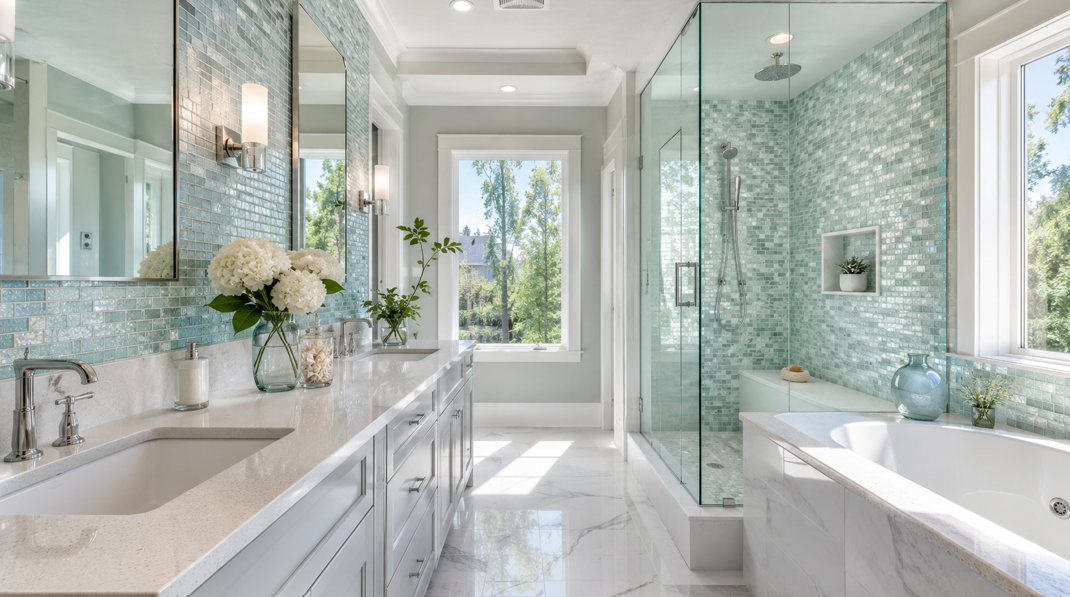
A Brighter Bathroom Can Start with One Thoughtful Detail
A bathroom can feel clean and functional yet still look flat, dark, or unfinished. That is common in newer homes where neutral builder finishes create a practical foundation but leave room for personality. A carefully placed glass tile accent can bring in color, depth, and light without covering every wall.
At The Home Center, homeowners can explore coordinated tile, flooring, and lighting options with guidance from experienced design professionals. That support can be especially valuable when several materials need to work together, including the shower tile, bathroom floor, vanity, countertop, fixtures, grout, and lighting.
Glass tile can reflect natural and artificial light, create a soft glow or crisp shine, and introduce color without making the room feel heavy. For Holly Springs homeowners planning a new-construction selection or bathroom update, the key is choosing the right location, color, finish, and scale.
Why Glass Tile Makes Bathrooms Feel Brighter
Glass tile interacts with light differently from many opaque materials. A glossy or translucent surface can reflect daylight from a window, light from a vanity fixture, or illumination from recessed ceiling lights. That movement of light helps a bathroom feel more open and visually active.
It Reflects Available Light
In a bathroom with limited windows, even a small reflective surface can make a noticeable difference. A glass backsplash behind the sink or a mosaic inside a shower niche can catch nearby light and create subtle highlights throughout the day.
Highly polished glass produces a sharper reflection, while frosted or textured glass creates a softer appearance. Iridescent tile can shift slightly in tone as the viewing angle changes.
It Adds Depth without Visual Weight
Glass can create a layered appearance because light reflects from the surface and may also move through part of the material. That depth can make an accent feel richer than a flat painted wall, yet it often remains lighter in appearance than a dense stone or heavily patterned ceramic.
In compact bathrooms, pale blue, pearl, soft green, warm white, and subtle gray can add personality while preserving an airy look.
It Brings Color into Neutral Rooms
Many Holly Springs bathrooms feature white, beige, gray, or stone-look finishes. These colors are versatile, but a room built entirely around them may need a focal point. Glass tile can bring in color through a narrow band, a niche, a backsplash, or a small feature wall.
Deeper shades such as navy, emerald, teal, or charcoal can also work beautifully when used in a controlled area. The goal is not always to make the tile the loudest feature. Often, the best result is a small accent that connects the rest of the design.
The Best Places to Use Glass Tile Accents
Placement has just as much influence as color or pattern. A modest amount of glass tile can create a strong design moment when it is positioned where the eye naturally travels.
Behind the Vanity
A vanity backsplash protects the wall from splashes and can connect the countertop, mirror, cabinetry, and lighting. A narrow backsplash keeps the look simple, while tile extending to the mirror or ceiling creates more presence. In a double vanity, glass can also sit between the mirrors.
When choosing the tile, look for a color or finish that relates to another permanent surface. A pearl mosaic may pick up the veining in a quartz countertop, while a blue-green glass blend can complement warm wood cabinetry.
Inside a Shower Niche
A shower niche is an ideal location for a distinctive tile because the area is small and naturally framed. Lining the back of the niche with glass mosaic can create a polished focal point without making the entire shower feel busy.
This works especially well when the main shower walls use quiet porcelain or ceramic tile. Careful planning of the pattern, niche dimensions, edges, and grout lines keeps the detail clean.
As a Horizontal Accent Band
A narrow strip of glass tile through a shower surround can introduce color and break up a large field of neutral tile. A horizontal line may also make the shower appear wider.
The band may repeat a vanity color, cabinet finish, or countertop tone. Width matters: a wide band can dominate, while a slim line may provide enough contrast.
As a Vertical Feature
A vertical strip can draw the eye upward and make a shower feel taller. It may be centered behind the showerhead, aligned with the controls, or placed along one side of a feature wall.
This layout suits contemporary bathrooms and allows a distinctive mosaic to stand out without wrapping around the entire room.
Around a Tub or in a Powder Room
Glass tile can create a calming, spa-inspired detail around a soaking tub, especially when paired with soft lighting and simple stone-look finishes. It can be used above the tub deck, inside a nearby niche, or on a wall that frames the bathing area.
A powder room offers room for a bolder choice. Because the space is smaller and generally does not include a shower, homeowners may feel more comfortable using stronger color, pattern, or shine behind the vanity or mirror.
Choosing the Right Glass Tile Style
The best glass tile supports the bathroom’s overall design rather than competing with every other finish.
Clear, Frosted, and Iridescent Finishes
Clear or polished glass creates a bright, crisp look. It works well in modern bathrooms and spaces where the goal is to maximize reflection.
Frosted glass has a softer appearance and may feel more relaxed. It can add color without producing as much glare.
Translucent glass creates visual depth, while iridescent tile changes subtly as light and viewing angles shift. These finishes can be especially effective in niches or vanity backsplashes where they are seen up close.
View samples beside cabinet, countertop, and wall-color selections because undertones can shift under different lighting.
Mosaic Shapes and Scale
Rectangles and linear mosaics often create a sleek, contemporary look. Squares and hexagons can feel more classic, depending on the color and layout. Penny rounds introduce a softer shape, while herringbone pieces create movement and a more decorative effect.
Smaller mosaics create more grout lines and texture, while larger pieces produce a calmer appearance.
Mixed-Material Mosaics
Some mosaics combine glass with stone, ceramic, or metallic-look pieces. These blends can help connect several bathroom finishes within one accent. For example, a mixture of warm glass and stone may coordinate with wood cabinetry, beige floor tile, and brushed brass hardware.
Confirm that every component is suitable for the intended location, since dry backsplashes, shower walls, and floors can have different requirements.
Coordinating Glass Tile with the Rest of the Bathroom
A strong bathroom design feels connected. Glass tile need not match every surface, but it should share at least one visual element with the room.
Homeowners can browse glass tile flooring options to compare colors, patterns, finishes, and mosaic combinations for bathroom accents. Individual products can have different approved uses, so it is important to confirm whether a specific tile is suitable for walls, shower areas, floors, or other applications.
Pairing Glass with Main Wall Tile
If the main shower tile is simple and neutral, the glass accent can carry more color or pattern. If the main tile already has strong veining or movement, a quieter glass tile may create a more refined result.
Look for a shared undertone, repeated color, related shape, similar shine, or grout color that ties the surfaces together. Warm white field tile may pair with pearl glass, while cool gray tile may suit blue-gray or charcoal accents.
Coordinating with Countertops
Boldly veined countertops usually pair best with restrained accents. A uniform countertop can support a colorful mosaic, geometric pattern, or stronger contrast. Bring a countertop sample to compare undertones accurately.
Matching Cabinetry and Hardware
Warm wood cabinets can work beautifully with amber, cream, bronze, muted blue, or green glass. White cabinets support a wide range of colors, while navy, gray, or black cabinetry often pairs well with lighter or more reflective tile.
Hardware also influences the final look. Chrome creates a bright, polished effect. Brushed nickel feels softer. Matte black adds definition, while brass and warm metallic finishes complement amber, cream, or warm-toned glass.
Considering Bathroom Lighting
Lighting can change how glass tile appears. Warm bulbs may soften blues, greens, and grays, while cooler light can make white and silver tones feel sharper.
Layered lighting can improve the result: vanity lights support tasks, overhead fixtures provide general illumination, and accent lights can highlight a niche or feature wall.
Glass Tile Ideas for Different Bathroom Styles
Glass tile can support many design directions. The shape, color, finish, and placement determine whether it feels calming, classic, modern, or bold.
Calm and Spa Inspired
For a relaxed bathroom, consider pale aqua, misty green, pearl, soft blue, or warm white glass. Pair it with light stone-look tile, simple cabinetry, and gentle lighting.
A niche, narrow backsplash, or subtle shower strip can create enough color to make the room feel inviting.
Clean and Contemporary
Linear mosaics, defined geometry, and a limited palette work well in contemporary bathrooms. White, charcoal, gray, blue-gray, and black glass can create a crisp finish.
A vertical feature strip or full-height vanity backsplash often suits this style. Keeping grout lines clean and edge details simple helps maintain the streamlined look.
Warm and Transitional
Transitional bathrooms combine classic and current elements. Glass tile in cream, beige, bronze, muted blue, or mixed neutral tones can bridge shaker cabinetry, stone-look surfaces, and updated fixtures.
A mosaic with related colors can connect the countertop, cabinet finish, and hardware.
Subtle Coastal Style
A coastal-inspired bathroom does not need obvious nautical motifs. Soft sea-glass colors, warm whites, light wood tones, and natural textures can create a fresh local look without feeling themed.
Use blue or green sparingly and let the reflective surface create interest.
Bold and Personal
For a stronger statement, consider emerald, navy, teal, black, or a multicolored mosaic. These choices often work best in a contained area such as a powder room wall, shower niche, or vanity backsplash.
Keeping the surrounding floor, wall tile, and countertop quieter allows the bold accent to remain the focal point.
Grout, Layout, and Edge Details Matter
Grout, cuts, transitions, and edge finishes strongly influence the final appearance.
Grout Color Changes the Look
A grout color close to the tile creates a smoother, more continuous effect. Contrasting grout highlights each individual shape and makes the pattern more visible.
Light grout can support an airy design, while a mid-tone grout may make everyday maintenance less noticeable. The right choice depends on the tile, location, desired style, and manufacturer guidance.
Plan the Pattern before Installation
Mosaics can look simple on a sample sheet but behave differently across a full wall. Planning helps determine where cuts will fall, how patterns align, and whether a niche or border needs to be adjusted for balance.
This is especially important with herringbone, linear mosaics, and mixed-size patterns, where a small layout shift can improve symmetry.
Finish Exposed Edges Carefully
Glass tile may need a finished edge, coordinating trim, profile, or carefully planned transition into another surface. These details help the installation look complete.
Some translucent tiles reveal the setting material behind them, so preparation and adhesive choice matter. Professional installation can support clean cuts and consistent spacing.
Caring for Glass Tile in a Bathroom
Glass tile is generally easy to maintain with regular, gentle care. Glossy surfaces may show water spots or mineral deposits, so light cleaning is better than waiting for buildup.
Helpful care habits include:
Wiping wet surfaces with a soft cloth or squeegee
Using nonabrasive cleaning pads
Choosing cleaners approved by the tile and grout manufacturers
Avoiding harsh products that may damage finishes
Maintaining grout and sealant according to product guidance
Addressing damaged grout or caulk before moisture reaches surrounding materials
Mixed-material mosaics may require extra attention because glass, stone, and metallic-look components can have different care instructions. Follow the most specific manufacturer guidance available for the full mosaic.
Common Glass Tile Mistakes to Avoid
Glass tile is flexible, but a few planning missteps can keep the finished bathroom from feeling cohesive.
Using Too Many Patterns
A heavily veined countertop, patterned floor, decorative wall tile, and bold glass mosaic can compete for attention. Choose one main feature and allow the other surfaces to support it.
Ignoring Approved Product Use
Not every glass tile is designed for every location. Confirm whether the product is approved for shower walls, bathroom floors, submerged areas, or dry backsplashes.
Choosing from an Online Image Alone
Screen colors, scale, shine, and texture may not accurately represent the material. A sample viewed beside the room’s other finishes provides a clearer picture.
Overlooking Lighting
A tile that looks soft and warm under one light source may appear cooler or more reflective under another. Evaluate samples under lighting similar to the completed bathroom.
Treating the Accent as a Separate Decision
The most successful accents relate to the floor, cabinets, counters, fixtures, grout, paint, and lighting. Consider the full palette before finalizing the glass tile.
Forgetting Installation Details
Cuts, corners, grout joints, edge finishes, and the material behind translucent glass all affect the result. Planning these details early supports a cleaner installation.
Bring More Light and Personality to Your Bathroom
Glass tile can brighten a bathroom, add depth, and create a customized focal point without covering every surface. A vanity backsplash, shower niche, vertical feature, tub detail, or powder room wall may be enough.
The strongest designs consider the full room. Color, finish, scale, grout, lighting, placement, product suitability, and installation all matter, particularly in wet areas.
Homeowners in Holly Springs, Apex, and Fuquay-Varina can benefit from working with a knowledgeable local team when coordinating bathroom tile, flooring, lighting, and installation choices. The Holly Springs showroom is currently open by appointment, with availability focused on new-construction appointments, so calling ahead is the best way to plan a visit.
Ready to explore glass tile accents for your Holly Springs bathroom? Get in touch with The Home Center to discuss your project and arrange an appointment.


