

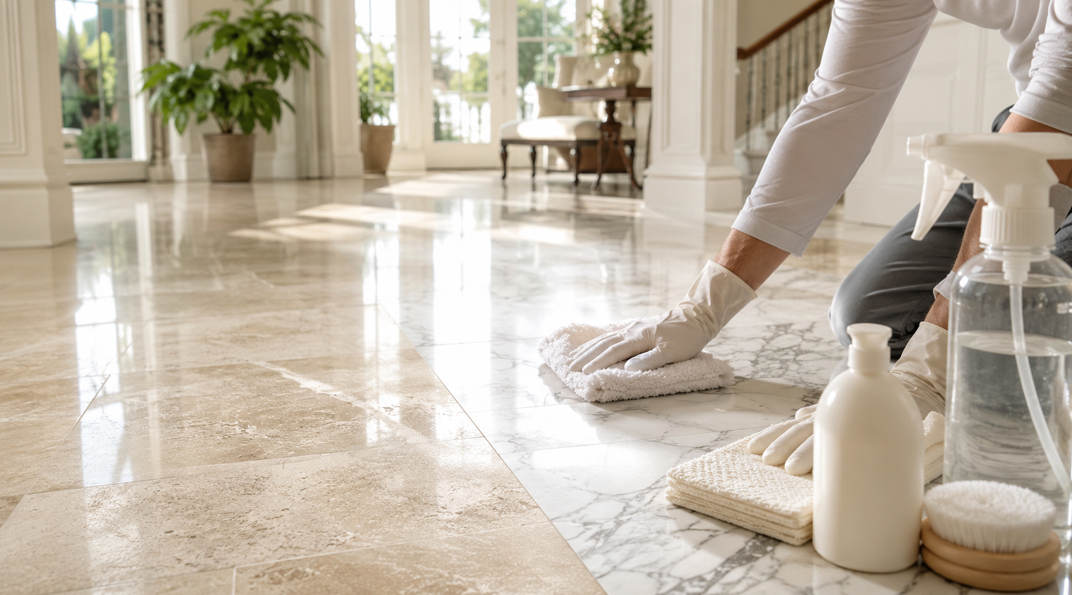
Beautiful Stone Needs the Right Kind of Cleaning
Marble and limestone bring a natural warmth and character to a home that is difficult to reproduce with manufactured materials. Every tile has its own variation in color, veining, texture, and movement, which is part of what makes natural stone so appealing in entryways, bathrooms, kitchens, and other living spaces.
That beauty deserves a cleaning routine that works with the stone rather than against it.
For homeowners in Fuquay-Varina, everyday life can bring plenty of dirt and moisture indoors. Summer rain, muddy shoes, pet traffic, cooking spills, bathroom products, and the fine grit carried in from driveways and walkways can all end up on a stone floor. Cleaning those surfaces regularly is a good idea, but using the wrong cleaner can create problems that ordinary dirt never would.
The most important point is simple: marble and limestone are calcium-based, or calcareous, stones. That makes them sensitive to acidic products. The Natural Stone Institute advises using mild, non-acidic cleaners on calcareous stone and warns that products containing lemon, vinegar, or other acids can dull or etch the surface.
At The Home Center, we help homeowners make informed flooring choices for the way their homes are actually used. That same practical approach matters after installation. You don't need an elaborate routine to care for natural stone, but you do need products and habits that suit the material.
This guide explains how to clean marble and limestone tile safely, what to avoid, how to handle spills and stubborn residue, and when a mark may need more than routine cleaning.
Why Marble and Limestone Need Different Care
Natural stone is not one uniform material. Granite, slate, marble, limestone, travertine, and sandstone can respond differently to cleaners because their mineral composition varies.
Marble and limestone contain a significant amount of calcium carbonate. This is what makes acidic cleaners particularly risky. When acid comes into contact with the surface, it can react with the stone and leave a dull, pale, or rough-looking area known as an etch mark.
Etching Is Not the Same as Staining
This distinction can save homeowners a lot of frustration.
A stain happens when a substance penetrates the stone and leaves discoloration. Oil, food, cosmetics, or other materials may create stains depending on the stone and its protection.
An etch mark is physical or chemical damage to the surface finish caused by an acid-sensitive reaction. The affected area may look lighter, duller, or less polished than the surrounding stone.
That means scrubbing an etch mark harder will not clean it away. In fact, abrasive scrubbing can make the appearance worse.
LATICRETE notes that acidic foods and liquids such as vinegar, wine, citrus, tomato products, and many soft drinks can etch marble, limestone, and travertine. It also explains that sealing can give you more time to wipe up a spill, but it cannot stop the chemical reaction that causes etching.
Sealed Stone Still Needs Stone-Safe Cleaning
A sealer can help improve stain resistance, but it does not make marble or limestone immune to acidic products, scratching, or surface wear.
This is why a sealed floor still benefits from:
Prompt spill cleanup
Frequent removal of grit and dust
A neutral cleaner made for natural stone
Soft cleaning tools
Careful product selection in bathrooms and kitchens
Think of sealer as added protection, not permission to use any household cleaner on the shelf.
The Safest Routine for Cleaning Marble and Limestone Floors
A good routine is usually simple. The goal is to remove abrasive debris first, then clean the surface with a product that will not attack the stone or leave excessive residue behind.
Step 1: Remove Loose Dirt and Grit
Start with a clean, non-treated dry dust mop or another soft tool suited to the floor.
This step matters more than it may seem. Sand, dirt, and grit are abrasive. When they are dragged across stone under shoes, a vacuum wheel, or a wet mop, they can contribute to fine scratches and dullness over time.
The Natural Stone Institute recommends frequent dust mopping and using entrance mats or area rugs to reduce the grit that reaches natural stone floors. It also advises checking vacuum attachments and wheels because worn metal or plastic parts can scratch some stone surfaces.
For Fuquay-Varina homes with active entryways, pets, or regular indoor-outdoor traffic, this dry-cleaning step can make a noticeable difference.
Step 2: Choose a Neutral Stone Cleaner
For routine washing, look for a pH-neutral cleaner specifically labeled for natural stone, including marble and limestone.
The Natural Stone Institute recommends neutral cleaner, stone soap, or a mild liquid dishwashing detergent with warm water for stone surfaces. It also cautions that using too much cleaner can leave film or streaking, so follow the manufacturer's dilution directions rather than assuming a stronger solution will clean better.
LATICRETE likewise recommends a neutral, pH-balanced stone cleaner for routine floor maintenance and notes that general-purpose cleaners may contain acids, alkaline ingredients, abrasives, or other components that can harm stone or affect existing sealer.
Step 3: Damp Mop Rather Than Flooding the Floor
Use a clean mop with the stone-safe cleaning solution and avoid leaving unnecessary standing water.
Work in manageable sections so dirt is lifted rather than redistributed. Change the rinse water when it becomes dirty, especially in entryways or high-traffic areas.
After cleaning, rinse if the product directions call for it. Removing cleaner residue helps preserve a clean, natural-looking finish.
Step 4: Let the Surface Dry Completely
A clean floor can still look streaky if dirty rinse water or excess product dries on the surface. Drying also gives you a clearer view of whether any remaining mark is actually soil, a stain, an etch mark, or a change in the finish.
Keep foot traffic off a freshly damp-mopped floor until it is dry, since smooth stone can become slippery when wet.
Cleaning Mistakes That Can Damage Marble and Limestone
Many common household products work well on other hard surfaces but are a poor match for acid-sensitive natural stone.
Avoid Vinegar and Lemon-Based Cleaners
Vinegar has a strong reputation as a household cleaner, but it does not belong on marble or limestone.
The Natural Stone Institute specifically states that vinegar should never be used on calcareous stones such as marble, limestone, or travertine.
The same caution applies to homemade cleaning mixtures containing lemon juice or other acids. A product can be natural and still be unsuitable for natural stone.
Be Careful With Bathroom and Grout Cleaners
Bathroom cleaners, scale removers, toilet bowl cleaners, rust removers, and grout products sometimes rely on acids to dissolve mineral deposits or residue.
That can be useful on acid-resistant surfaces, but not on marble and limestone.
For example, LATICRETE's acidic Restore cleaner is specifically marketed for acid-resistant stone and warns that the product can etch or damage most polished marble, limestone, and travertine.
If a shower or bathroom contains both grout and marble tile, choose the cleaner based on the most sensitive material present rather than assuming a grout cleaner is safe for everything around it.
Skip Abrasive Powders and Aggressive Scrubbing Pads
Scouring powders and abrasive creams can scratch certain natural stone surfaces. Coarse pads may also change the sheen of a polished or honed finish.
When routine soil does not come away with a stone-safe cleaner, more force is not always the answer. First identify what you are dealing with.
Do Not Mix Cleaning Chemicals
Mixing household cleaners can create dangerous reactions. The Natural Stone Institute specifically warns never to mix ammonia and bleach because the combination creates a toxic gas.
Use one suitable product at a time and follow its label directions.
How to Handle Everyday Spills Without Making Them Worse
Spills happen. The way you respond can help limit how far the liquid spreads and how long it stays in contact with the stone.
Blot Instead of Wiping
For a fresh spill, blot it promptly with a clean absorbent cloth or paper towel. Wiping can spread the liquid over a larger area.
After blotting, use the appropriate stone-safe cleaning method for the residue and dry the surface thoroughly.
The Natural Stone Institute recommends blotting spills immediately, flushing the area with water and mild soap as appropriate, rinsing, and drying with a soft cloth.
Pay Extra Attention to Acidic Foods and Drinks
On marble and limestone, common acidic substances can create etching. Examples include:
Citrus juice
Wine
Vinegar
Tomato-based foods
Some soft drinks
Certain bathroom and cosmetic products
Quick cleanup is worthwhile, but an etch mark can occur even on sealed stone because the acid reacts with the mineral surface.
Oil and Grease Need a Different Approach
Cooking oil, greasy food, cosmetics, and other oily materials can leave darker discoloration if they penetrate porous stone.
Avoid immediately attacking a deep stain with whatever strong cleaner is nearby. Natural stone stain treatment depends on the substance involved, the depth of penetration, the stone, and the finish. For a valuable floor or a stubborn mark, identifying the stain first is more reliable than experimenting with multiple chemicals.
Choosing Cleaning Products for Natural Stone Tile
When you're comparing products for natural stone flooring, the front label is only the starting point. Look for clear compatibility information for the exact material you have.
A useful routine-cleaner checklist includes:
Labeled for natural stone
Suitable for marble and limestone
pH-neutral for regular maintenance
Non-abrasive
Compatible with sealed stone, if your floor is sealed
Clear dilution and rinsing instructions
Appropriate for the floor's finish
Daily Cleaner vs. Heavy-Duty Cleaner
A daily or routine cleaner is designed for regular soil, light spills, and ordinary maintenance.
A heavy-duty product is intended for more stubborn grease, grime, buildup, or preparation work. Heavy-duty does not have to mean acidic. For example, LATICRETE lists an alkaline heavy-duty cleaner that is designed for natural stone and specifically includes marble and limestone among its compatible substrates.
The key is compatibility, not simply whether a bottle says "strong."
Test New Products First
Even when a product is labeled for stone, testing it on a small, inconspicuous area is a sensible habit, particularly on an older floor where the previous sealer or treatment is unknown.
Check the area after it dries and look for:
A change in sheen
Darkening
Haze
Residue
Discoloration
Any unexpected texture change
If the result looks right, continue according to the product directions.
Bathroom, Kitchen, and Entryway Care in Fuquay-Varina Homes
Different rooms create different cleaning challenges. A practical care routine can change slightly based on where the stone is installed.
Marble and Limestone in Bathrooms
Bathrooms can develop soap residue and mineral buildup from repeated water exposure.
For routine care:
Use a stone-safe neutral cleaner.
Wipe or squeegee wet surfaces when practical.
Keep ventilation working well.
Address soap residue before it becomes heavy buildup.
Avoid reaching for acidic lime or scale removers unless the product is specifically confirmed safe for the stone.
The Natural Stone Institute recommends a squeegee in wet areas to reduce soap scum and advises using a non-acidic soap scum remover on natural stone.
Natural Stone in Kitchens
Kitchen stone floors can encounter grease, crumbs, wine, citrus, tomato sauce, and repeated foot traffic.
Sweep or dust mop regularly so food particles and grit do not remain underfoot. Blot acidic spills quickly, and use a suitable neutral cleaner for routine washing.
If grease buildup develops, select a stone-compatible cleaner designed for that type of soil rather than increasing the concentration of an ordinary cleaner beyond its label directions.
Entryways and Mudrooms
For many local homes, prevention is the easiest form of maintenance.
Place good-quality mats near exterior doors and clean them regularly so they continue trapping soil rather than redistributing it. During wet weather, remove mud and grit promptly instead of allowing it to dry into textured stone.
This is particularly useful in busy households with children, pets, or frequent backyard traffic.
When a Mark Needs More Than Routine Cleaning
Not every mark on natural stone is dirt. Recognizing the difference can prevent unnecessary scrubbing.
A Dull Spot May Be Etching
If a polished marble tile develops a pale or dull area after contact with an acidic drink or cleaner, the surface may be etched rather than stained.
Cleaning will not restore material that has reacted chemically. Depending on the severity and finish, professional refinishing may be needed to restore an even appearance. LATICRETE similarly notes that professional refinishing is the best route for permanently removing etch marks and restoring the finish.
A Dark Spot May Be a Stain
A stain is usually discoloration caused by a substance that has entered the stone. The right treatment depends on what caused it.
Oil, organic material, rust, cosmetics, and other substances do not necessarily respond to the same treatment, so avoid trial-and-error use of harsh cleaners.
Widespread Dullness May Have Several Causes
A floor that looks generally cloudy or dull could be affected by:
Cleaner residue
Fine scratching from grit
Surface wear
Etching
A topical coating
An old or improperly maintained finish
If the cause is unclear, professional evaluation can help distinguish a cleaning issue from a restoration issue.
A Simple Care Routine That Protects Natural Stone
Marble and limestone do not need to be intimidating to own. A consistent routine built around the right products can preserve the color, texture, and finish that make these stones special.
For everyday care:
Remove dust, sand, and grit frequently.
Use entrance mats to reduce tracked-in debris.
Choose a neutral cleaner formulated for natural stone.
Follow dilution instructions.
Blot spills rather than spreading them.
Rinse and dry as directed.
Keep vinegar, lemon cleaners, and other acidic products away from marble and limestone.
Avoid abrasive powders and aggressive scrubbers.
Test unfamiliar products in a hidden area first.
Seek professional guidance when you cannot identify a mark or existing treatment.
The biggest mistake is assuming every hard floor can be cleaned the same way. Marble and limestone reward a gentler, material-specific approach.
For homeowners in Fuquay-Varina, Apex, and Holly Springs, that approach also fits the realities of local living. Rain, outdoor grit, active entryways, kitchens, bathrooms, pets, and family traffic all affect a floor. Regular, appropriate care helps keep those everyday demands from taking attention away from the stone's natural beauty.
If you're choosing natural stone for a new project or need help understanding the flooring options that best suit your home and lifestyle, get in touch with The Home Center. Our knowledgeable team can help you explore beautiful, high-quality flooring with practical guidance for long-term care.


